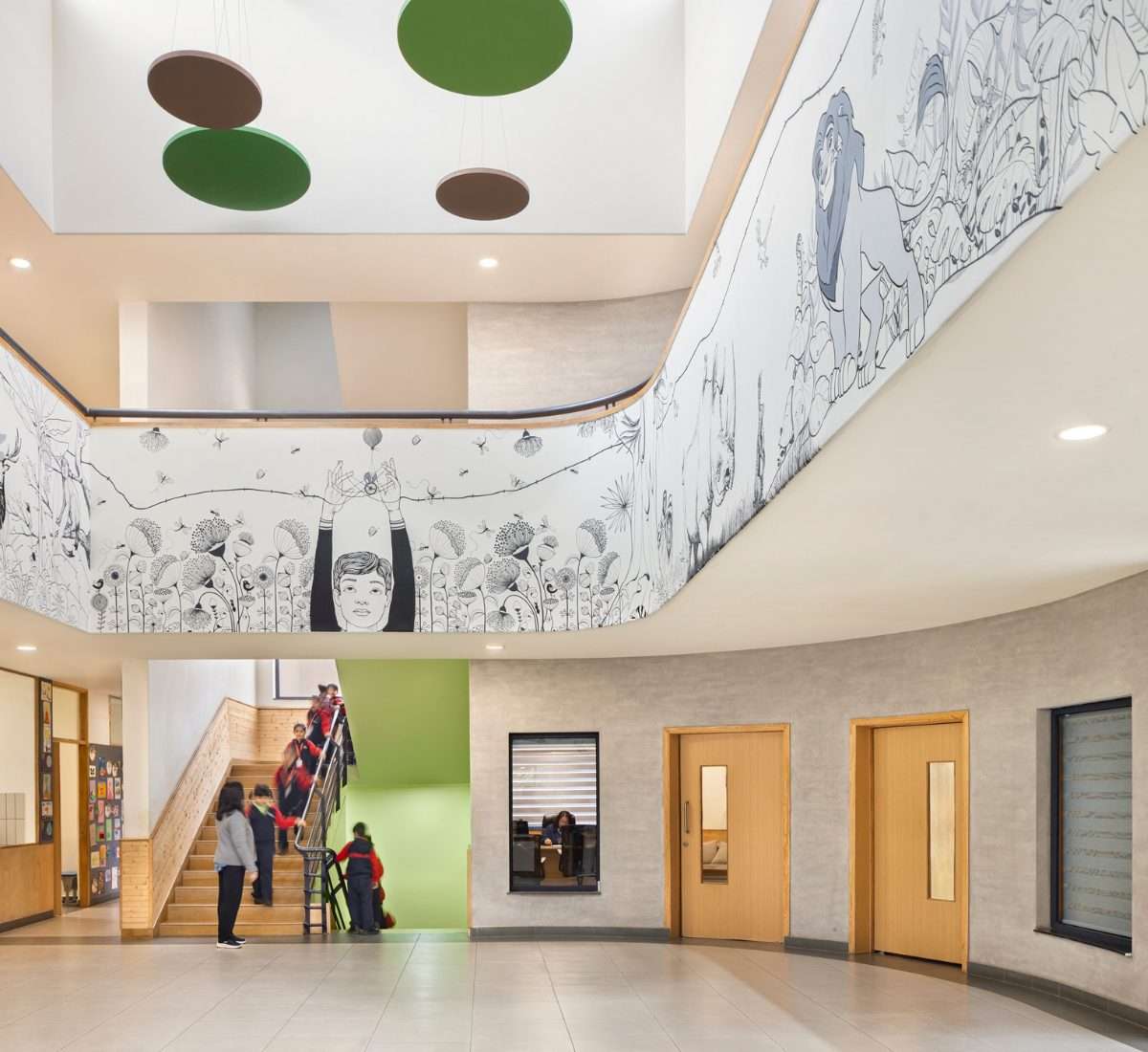
A school where light, tactility, and transparency become companions in learning.
Tucked within the leafy lanes of Nagpur, Mother’s Pet School is designed as a child’s first structured encounter with the world beyond home. The school is envisioned as a nurturing environment where play, movement and exploration naturally become the earliest forms of learning. Set within a mixed-use neighbourhood, the building stands quietly amidst the urban fabric, drawing children and caregivers into its gentle rhythm.
Here, architecture acts as a caring companion through transparency, natural light, and tactile detail to create spaces that foster trust, comfort and emotional well-being in young learners. Every element is scaled to a child’s body and sense of movement, so that the building supports rather than overwhelms their earliest steps toward independence.
The First Step
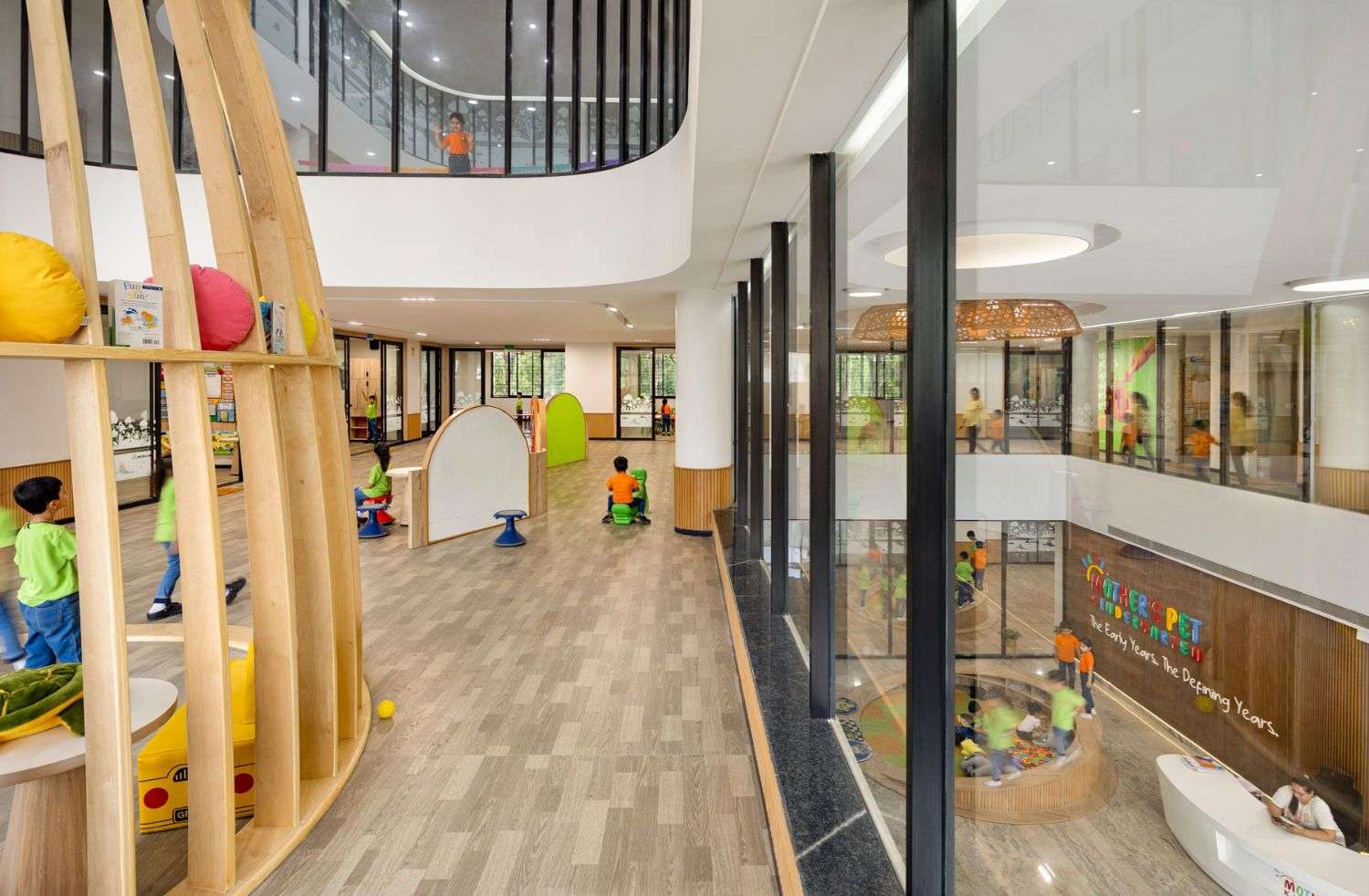
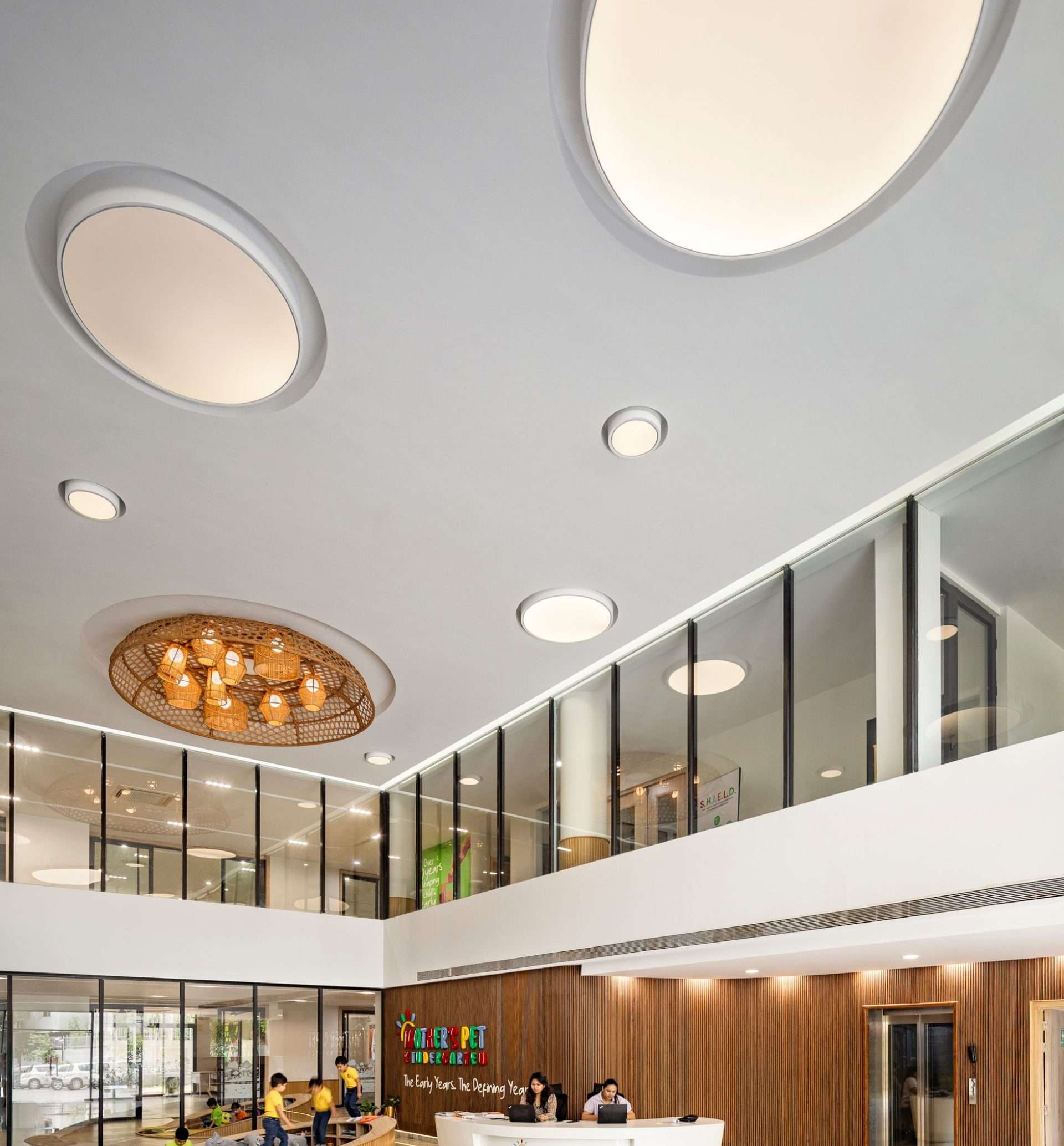
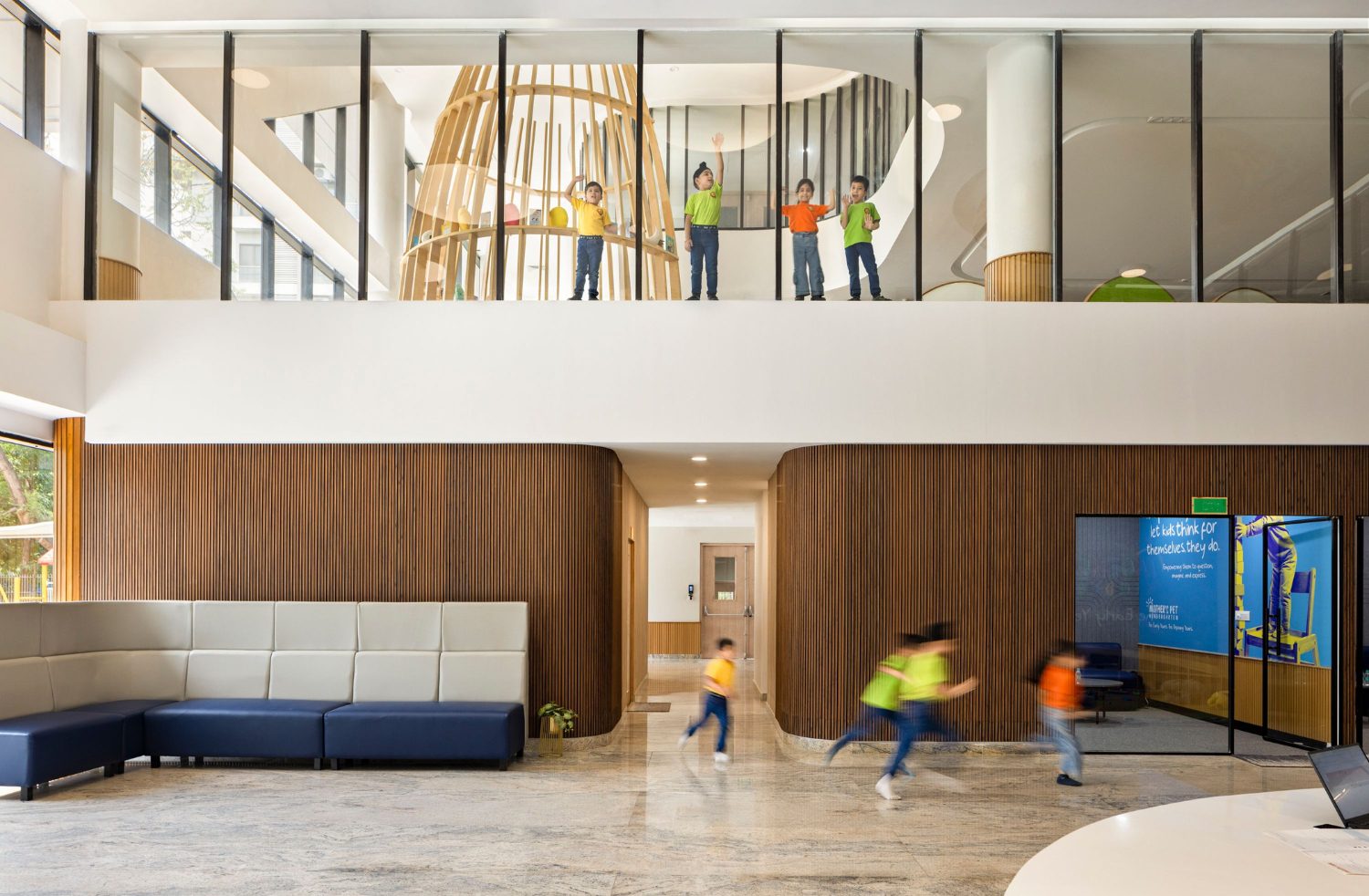
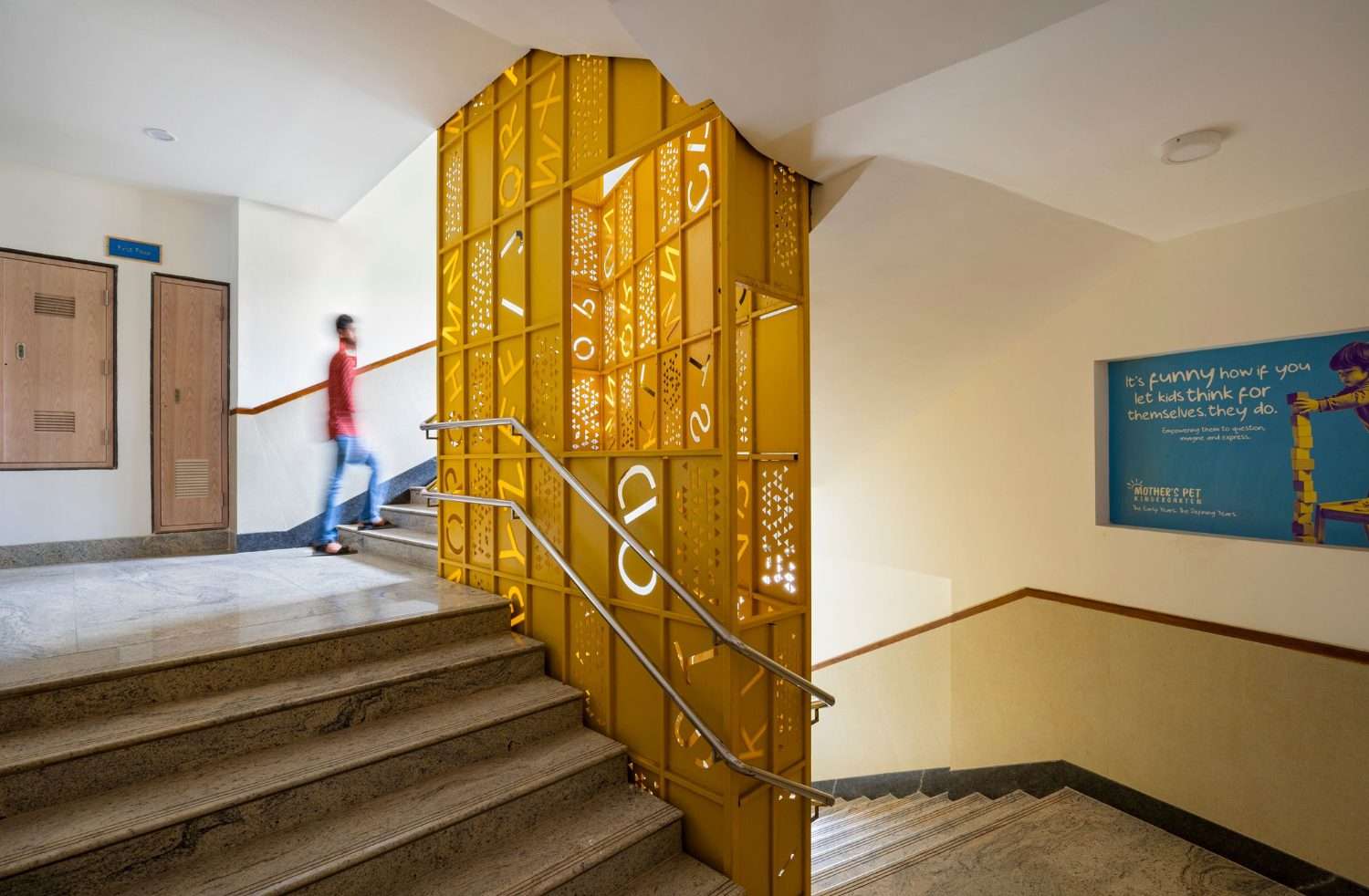
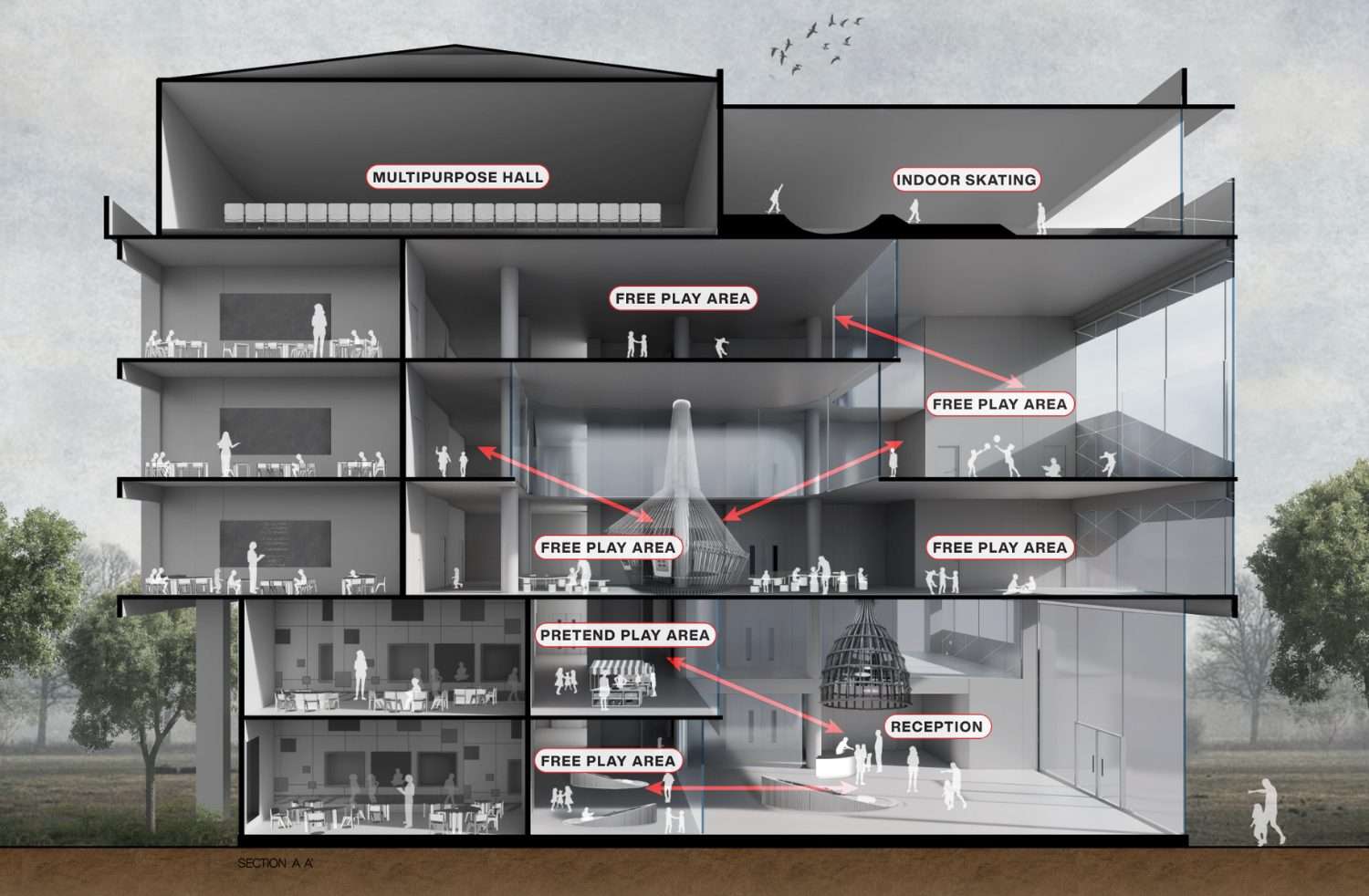
The school experience begins with a sense of calm clarity. A double-height reception space, finished in wood and soft whites, introduces a welcoming tone. Overhead lighting is diffused and soft. A glazed playroom adjacent to the reception offers toddlers a place to engage while remaining visible to their parents, easing separation and supporting early independence. Wide corridors branch out from this space. These are not just movement zones but informal areas of play. Integrated seating, crawl-through elements and tactile panels transform circulation into an interactive experience. Classrooms placed along the periphery bring in abundant natural light, while interior glass partitions maintain transparency and connection across spaces.
Building Confidence Through Play
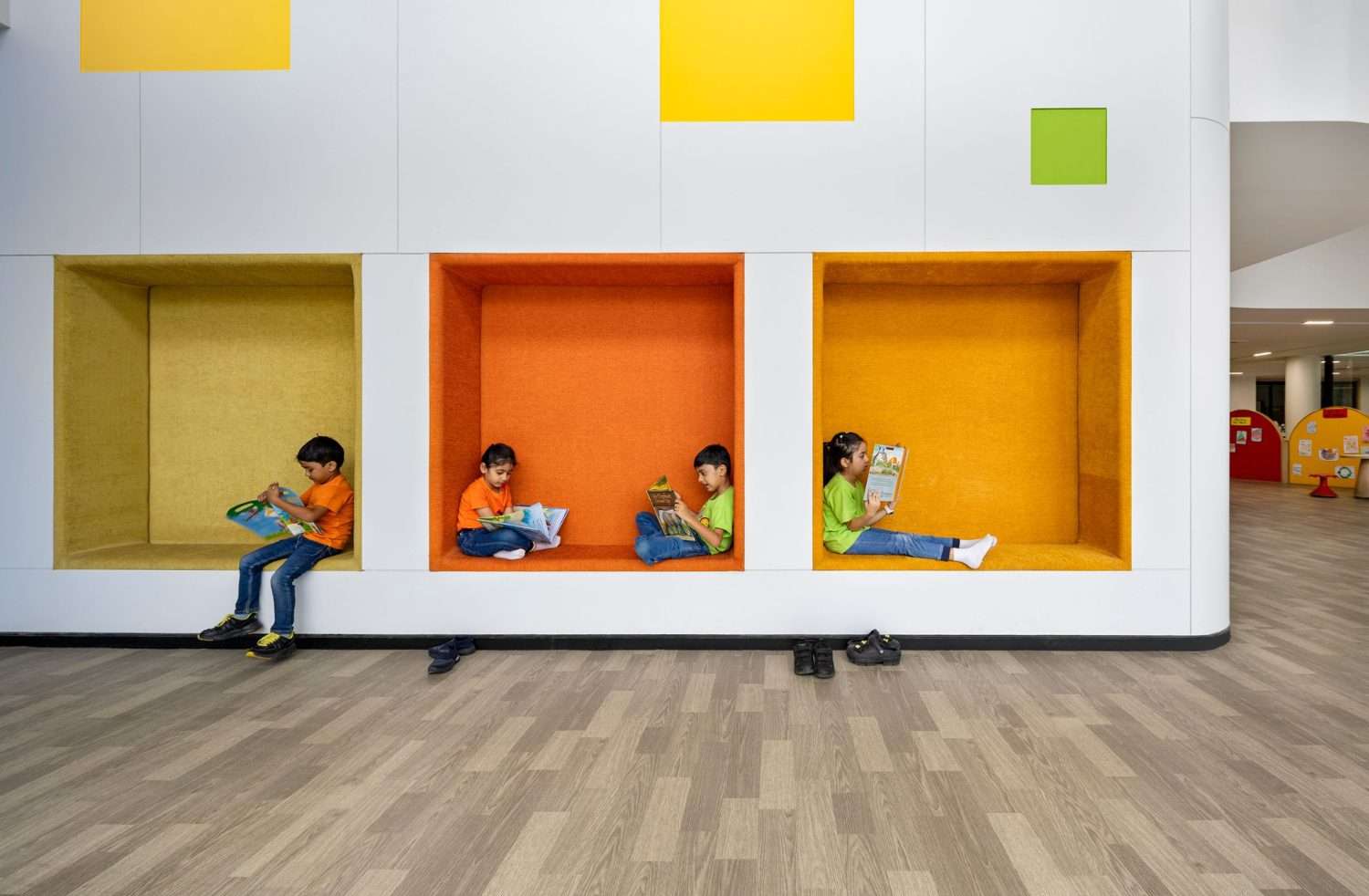
As children move upward, the spaces grow more expressive. The material palette remains consistent, while colour begins to appear in the form of accent walls, furniture and play objects. Play areas are more defined, with settings for storytelling, role-playing and sensory exploration. A vertical wooden enclosure provides a semi-private retreat for small group play. Visually open yet spatially contained, it allows children to step back without feeling cut off. The design acknowledges that children’s needs and moods shift throughout the day and offers multiple settings to support those transitions with ease.
Learning Through Making
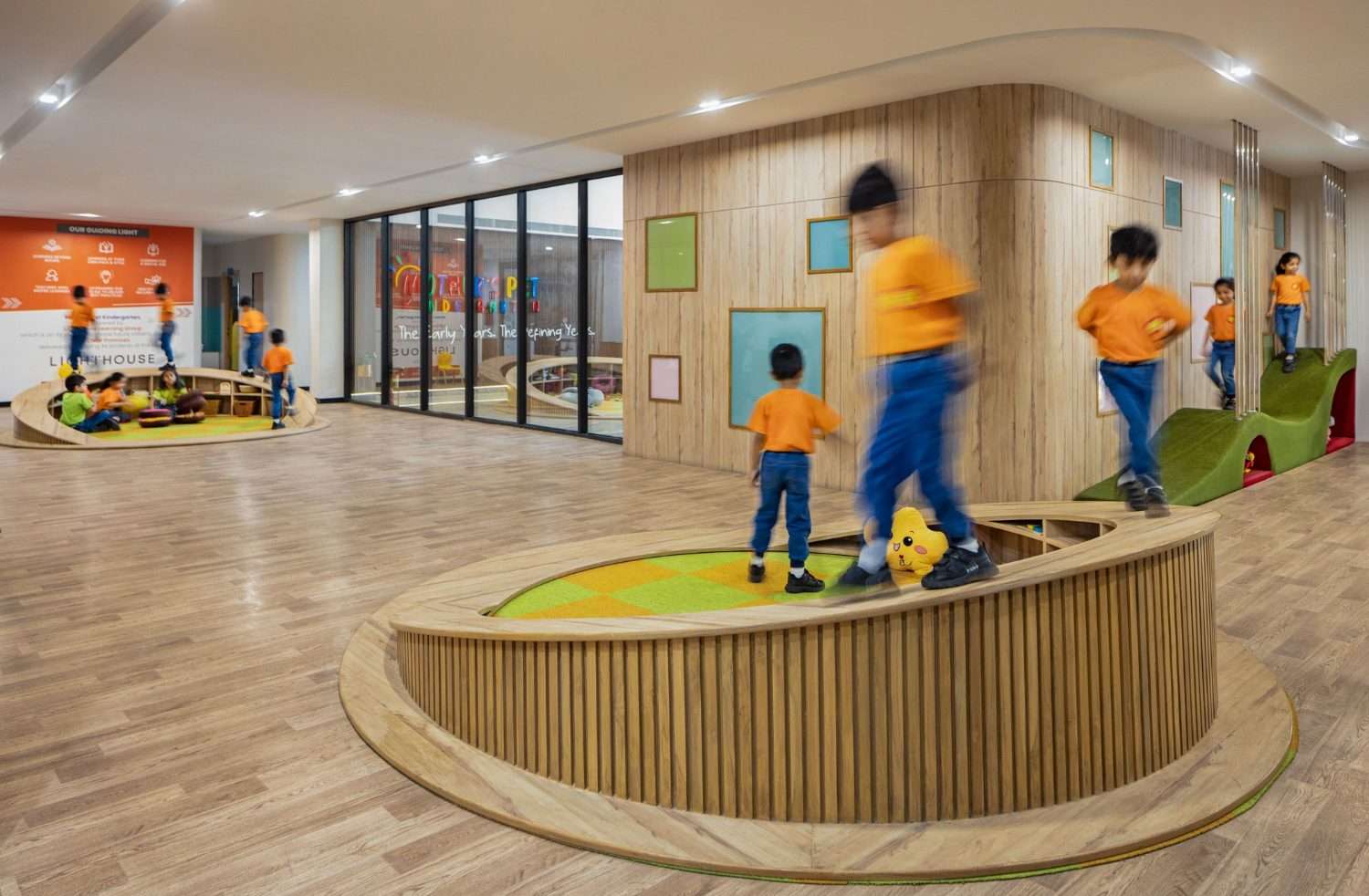
The kindergarten level introduces a more collaborative environment. At its centre is a large, open studio for shared activities such as art, building or project work. Curved tables and soft seating are arranged loosely, encouraging movement and group interaction. A sculptural wooden installation anchors the space, serving as a display and play element. Light plays an essential role here. It filters in through large windows and open partitions, keeping the space bright and grounded. Transparency and tactile warmth work together to create a secure yet stimulating atmosphere.
A Framework for Exploration
The interiors of Mother’s Pet School have been shaped with careful attention to material, proportion and sensory detail. Wood is used extensively for its warmth and tactile comfort. It forms everything from furniture to play enclosures, always scaled to a child’s body and sense of movement. The overall palette is soft and natural, with colour introduced as an accent that becomes more pronounced as children progress through the school.
Transparency plays a central role in the interior language. Glass partitions preserve visual continuity and keep sightlines open, supporting a sense of security and connectedness. Each space flows into the next with clarity, avoiding abrupt transitions and creating a sense of spatial rhythm.
A Place That Grows with the Child
On each level, Mother’s Pet School offers a carefully scaled experience—never overwhelming, always open. The design supports transitions, not just between activities but across stages of early development. Children are invited to explore, observe and participate in ways that feel natural to them. Through its spaces, the building builds trust, offering comfort, independence and room to grow.