Where rich Indian traditions and modern design create a vibrant, thriving community for learning.
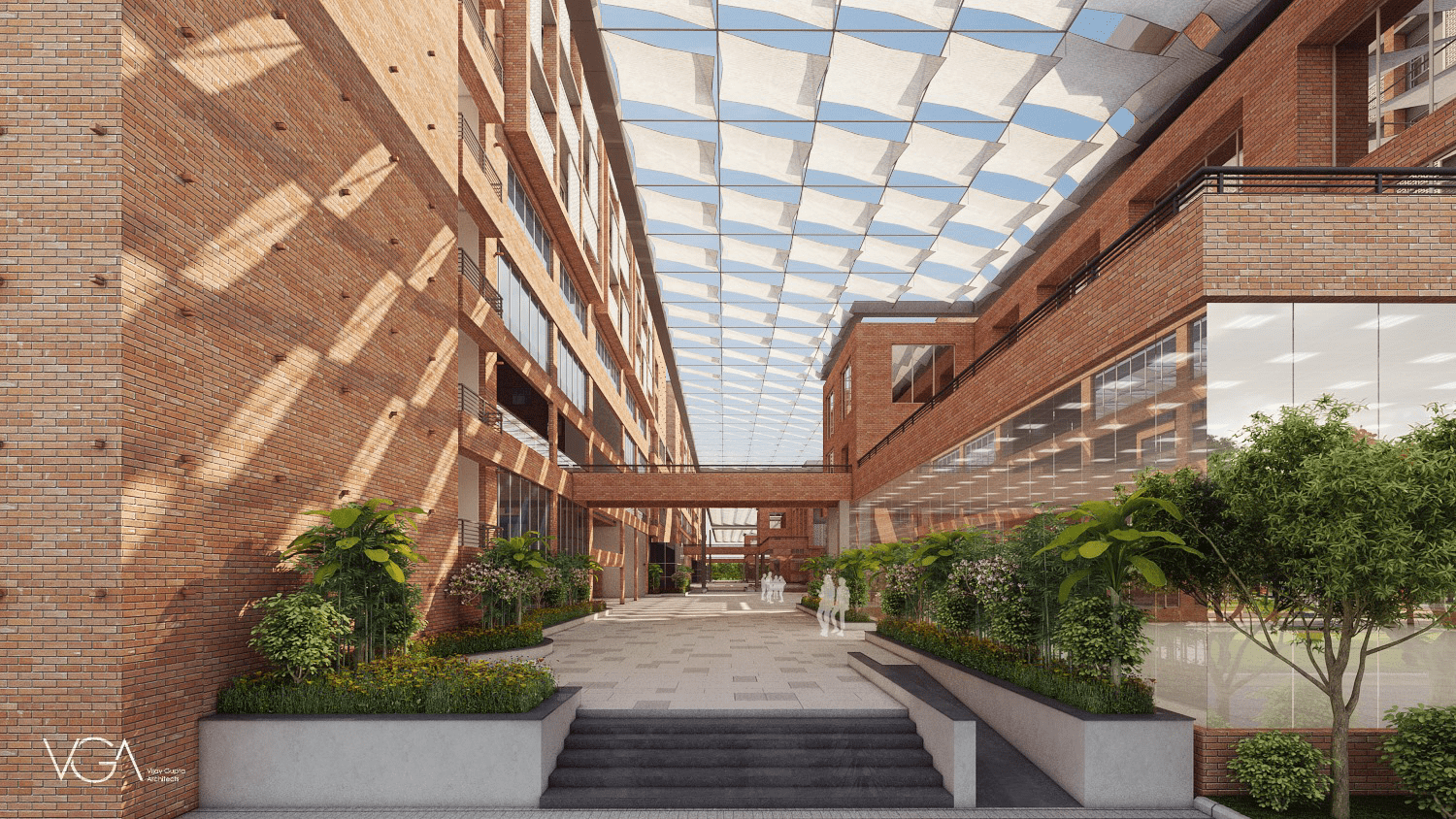
In today’s rapidly evolving Indian higher education landscape, universities are moving beyond traditional classroom models to create environments that combine academic rigour with real-world relevance. Guided by progressive policies like the National Education Policy 2020, which advocates for blended learning, technology integration, and inclusive community-building, institutions are preparing students not only for knowledge acquisition but also for practical challenges. The emphasis is increasingly on crafting campuses that support holistic growth—academically, socially, and physically.
The design of Rishihood University in Sonipat embodies this progressive shift by blending tradition with modernity to craft a campus that bridges time-honoured educational philosophies with contemporary learning environments. The design approach harmonises elements of traditional Indian spatial and communal principles with modern campus planning, producing a setting that nurtures focused study while encouraging open-ended exploration.
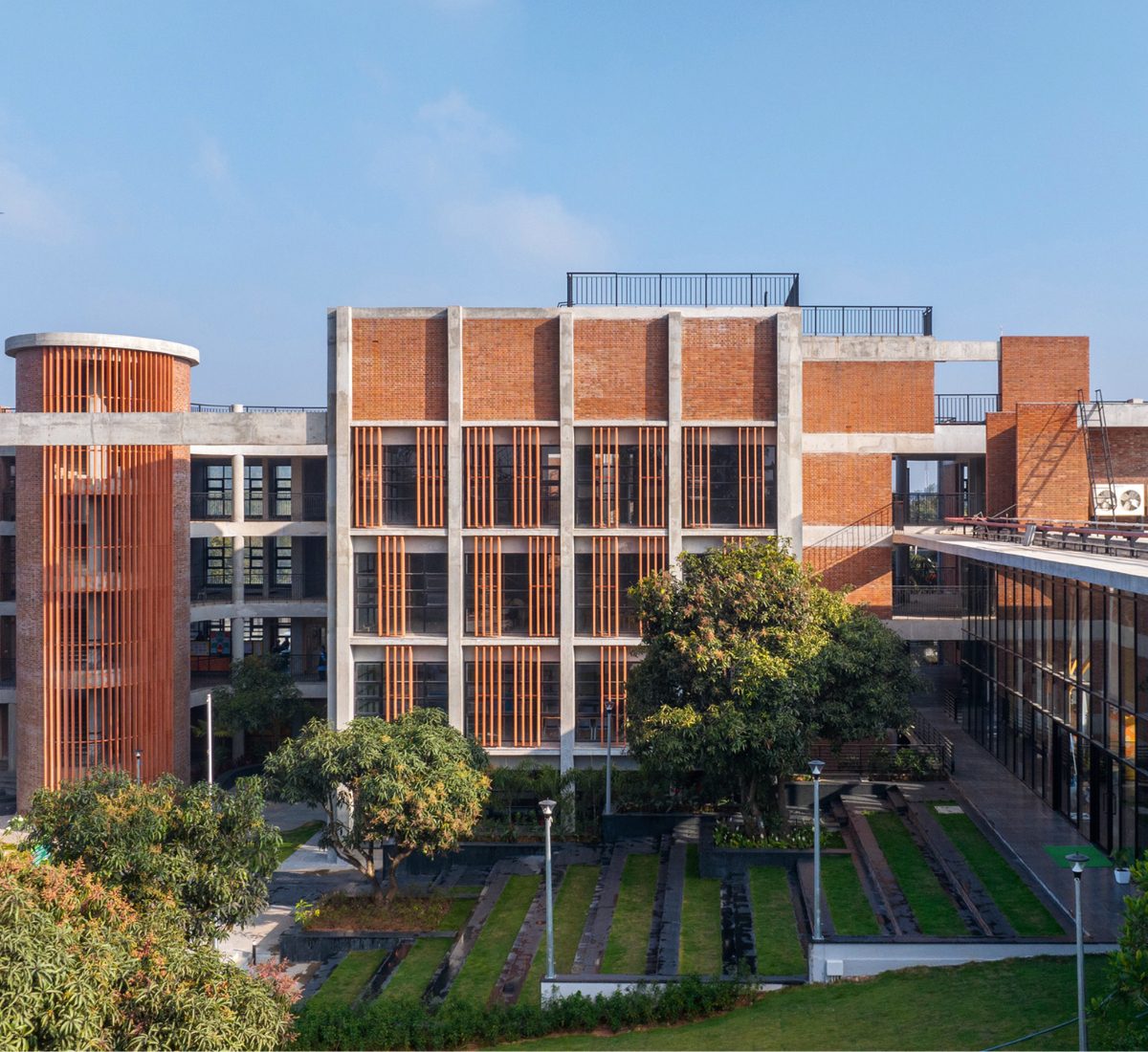
Architecturally, the campus facade is a deliberate material expression that narrates this story. Rhythmic patterns and a rich material palette, including exposed brickwork and intricately perforated screens, recall heritage craftsmanship while asserting a contemporary character. This intentional design gives the campus a distinctive identity that honours its roots while looking forward.
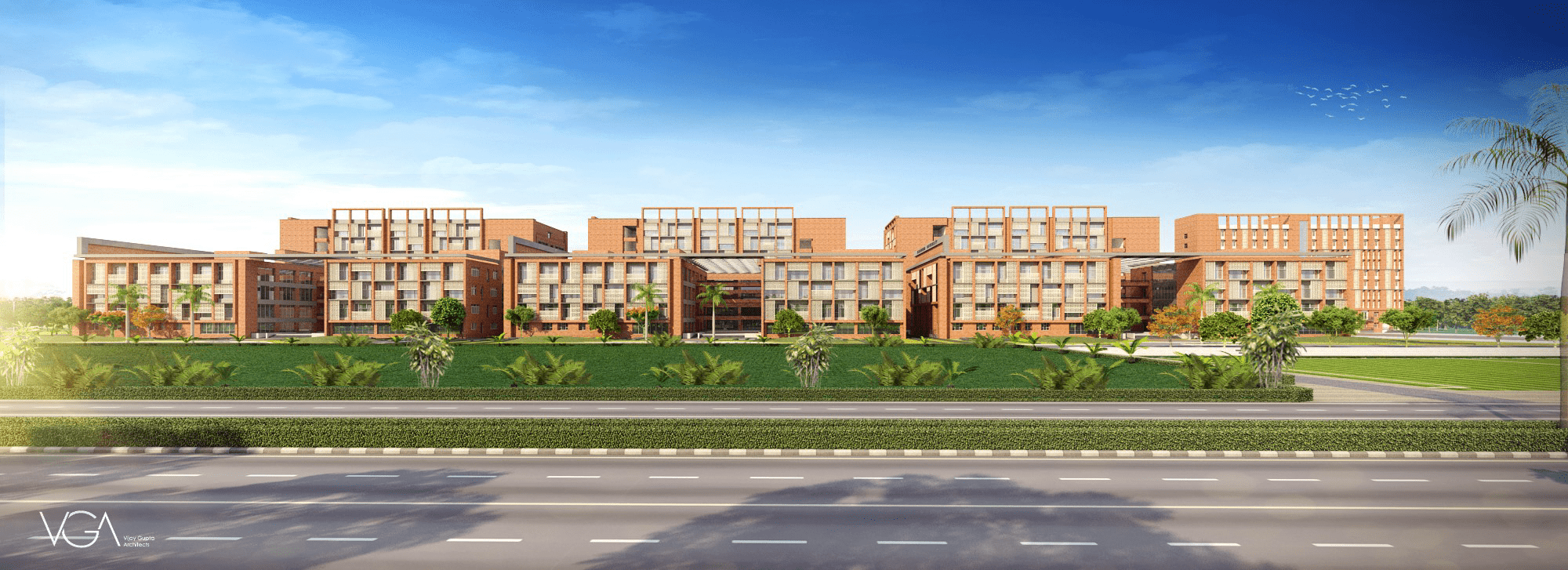
Situated in Sonipat, the campus benefits from its semi-urban context that blends open green landscapes with regional climatic conditions characterised by hot summers and cool winters. The main entrance faces south, aligning directly with the central pedestrian spine that extends into the campus, creating a natural and ceremonial approach from the highway. This spine organises movement but also frames the spatial experience, acting as a vital connective artery between different campus zones while offering shaded areas and social pockets reflective of the local microclimate and vernacular outdoor living traditions. The master plan organises the campus into an interconnected network of academic, residential, and recreational zones. The northern sector forms a structured core, housing academic blocks and hostel clusters designed to cultivate intellectual engagement and residential immersion. In contrast, the southern zone is animated by the sports complex and communal amenities, activating the campus socially and physically. Linking these distinct zones is a well-defined circulation spine that functions like a vibrant campus street. Inspired by the dynamic quality of Indian urban streetscapes and traditional community layouts, this spine fosters spontaneous conversations, group learning, and cultural exchange beyond formal classrooms. This spatial strategy draws from traditional Indian community planning, where shared streets and courtyards act as extensions of living and learning spaces, promoting cross-learning and serendipitous interactions.
The hostels reflect traditional Indian residential concepts through verandahs overlooking corridors—akin to historic chabutras or neighbourhood gathering places—encouraging community life and informal socialising. Twin-sharing rooms are paired with shared hygienic cores and intimate courtyards, fostering efficiency while nurturing a sense of belonging and “home away from home.”
Inside the academic buildings, classrooms are designed for flexibility and technological integration. Stepped, amphitheatre-style seating supports simultaneous physical and virtual learning, aligning with Rishihood’s commitment to blending traditional education with future-ready teaching tools. Alongside these formal spaces, informal gathering areas dot the campus, inviting moments of reflection, conversation, and creative exchange.
The campus also embraces wellness and sustainability as key design drivers, incorporating open green spaces and sports facilities that promote physical activity and mental well-being. The sports block and adjoining outdoor fields provide venues for recreation and community engagement, complementing the academic and residential environment.
By layering public spaces throughout the campus and weaving traditional spatial ideas with contemporary design strategies, Rishihood University cultivates an active, vibrant learning culture. It is a place where the foundations of education are respected, and where students experience a seamless blend of academic focus, social connection, and cultural identity—all within a campus that embraces the possibilities of the future.